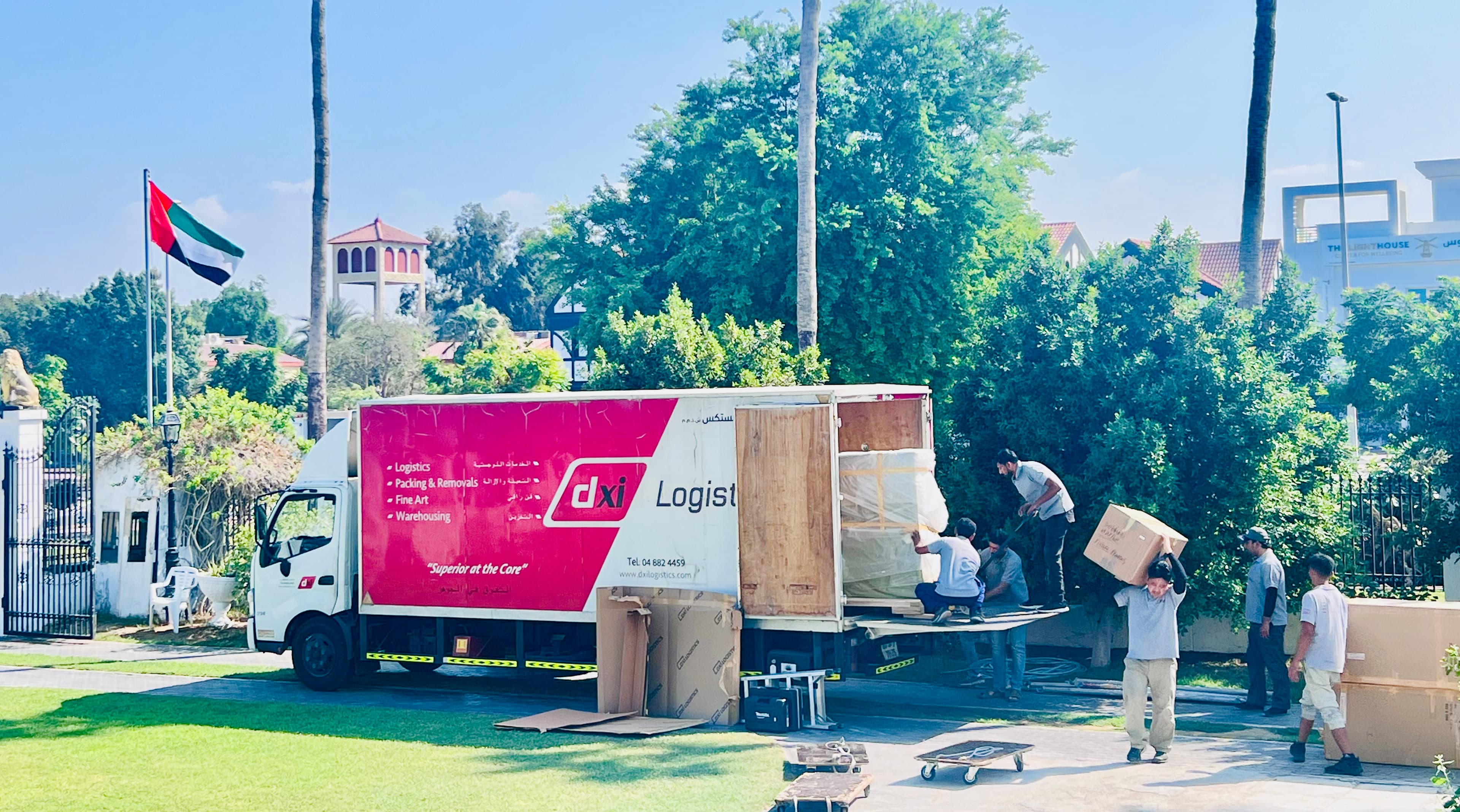

Moving Household Goods From Dubai to the USA
The order things happen, from the survey in Dubai to customs clearance and delivery in the United States.
Moving your household goods from Dubai to the United States runs on two tracks. In Dubai, your mover surveys and packs your home, builds the inventory and handles the export. On the US side, used household furnishings can enter free of duty when they meet the conditions in US customs regulations, and you declare them on CBP Form 3299. Keep your inventory accurate, keep new and restricted items out of the container, and the clearance is mostly paperwork your coordinator and the US customs broker handle with you.
What has to happen before a household shipment can leave Dubai?
A shipment cannot be priced or booked until someone has seen what is going. Your moving coordinator surveys your home, in person or by video, and works out the volume, the packing materials and the crew needed. Expect them to ask for the details on our Shipper Information Sheet: your destination city in the US, your preferred moving date, any items that need special handling, and building access at both ends.
Before packing day:
- Confirm your move out permit and elevator booking with your building management.
- Decide what is going, what is being sold, and what is being stored.
- Give your coordinator a copy of your passport and US visa or green card, so the paperwork matches the shipment.
- Note when you bought anything recent: newer items are treated differently at US customs (see below).
Sea or air: which suits a household move to the USA?
Most household moves from Dubai to the United States travel by sea. Sea freight costs far less than air for furniture and boxed goods, and the trade off is time: a sea shipment is measured in weeks, not days. Your coordinator will give you the sailing schedule and the US arrival port for your shipment, and that schedule is the one to plan around.
Air freight suits a small consignment you need soon after you land, such as clothes, work equipment or children’s things. Many families send most of their home by sea and a small air shipment alongside it.
- A dedicated container holds only your goods and stays sealed from your home to the US. It suits a full home.
- A shared container carries your goods alongside other shipments. It suits a smaller move and costs less, and it usually takes longer because the container waits to be filled and is unpacked at a depot.
When can household goods enter the US free of duty?
US customs regulations allow furniture, carpets, paintings, tableware, books and other usual household furnishings and effects to enter free of duty when the conditions in 19 CFR 148.52 are met. In summary:
- The goods were actually used abroad for not less than 1 year, and the year does not need to be continuous or immediately before the move (19 CFR 148.52).
- They are not intended for any other person or for sale (19 CFR 148.52).
- Effects used by your family household abroad can qualify, even where you were not the owner (19 CFR 148.52).
- The year of use has to be shown to the satisfaction of the port director, who may ask for evidence beyond your declaration (19 CFR 148.52).
You declare the goods on CBP Form 3299, the declaration for free entry of unaccompanied articles. If the declaration cannot be produced when the goods are entered, a bond can be given to produce it within 6 months (19 CFR 148.52). Timing also matters: effects that arrive more than 10 years after you last arrived from the country they come from generally do not qualify, and free entry is never allowed after 25 years (19 CFR 148.52).
Whether you qualify, and which documents US customs asks for, can depend on your status in the US. Confirm your situation with your coordinator and the US customs broker before packing day.
What documents does each side of the move need?
| Stage | In Dubai | For the USA |
|---|---|---|
| Booking | Survey of your home, quote, moving date agreed | Check your goods meet the 1 year use condition above |
| Before packing | Passport and visa or green card copy to your coordinator, building move out permit booked | CBP Form 3299 prepared with your coordinator and the US customs broker |
| Packing day | Goods packed and listed on the inventory, which you check and sign | Keep the inventory: it supports your declaration |
| In transit | Your coordinator tracks the shipment and confirms the arrival port | Keep your arrival date and US address up to date with the broker |
| Arrival | Nothing more to do in Dubai | Goods cleared with your declaration, then delivered to your new address |
Your DXI moving coordinator will confirm the exact document set for your route before anything is packed. Our Customs Documents page links to each country’s official customs authority.
What should travel with you rather than in the shipment?
- Passports, visas, residency papers, birth and marriage certificates, school and medical records.
- Jewellery, cash and small valuables.
- Laptops, phones and the chargers for them.
- Medicines you take regularly, in their original packaging.
- Clothes and essentials for the weeks before your shipment is delivered.
Keep new items out of the container where you can: goods you have not used abroad for a year do not meet the duty-free condition. Check CBP’s list of prohibited and restricted items before you pack, and leave out anything on it. Food, plants and alcohol are the items most often questioned in household shipments, so ask your coordinator before packing any of them.
Our Moving Checklist has the full timeline for the weeks before moving day.
What happens when the shipment reaches the US?
When your goods arrive, they are cleared through US customs with your declaration, then delivered to your new address. On delivery day, check every item against your inventory and note any damage or missing pieces on the delivery paperwork before the crew leaves.
If your new home is not ready when the shipment arrives, tell your coordinator early. Goods can be held in storage until you can take them, which is easier to arrange before the shipment lands than after.
Frequently asked questions
Do new items in a household shipment pay US duty?
They can. Duty-free entry under 19 CFR 148.52 covers household effects actually used abroad for at least 1 year (19 CFR 148.52). Something bought recently does not meet that condition.
Can my shipment arrive in the US long after I move?
There is a limit. Effects arriving more than 10 years after your last arrival from that country generally do not qualify for free entry, and never after 25 years (19 CFR 148.52). Most families ship within weeks of moving, well inside that limit.
What happens if my shipment arrives before I do?
Tell your coordinator your arrival date as soon as you know it. If the shipment lands first, it can wait in storage until you are there to receive it, and arranging that in advance avoids charges at the port.
Are you also moving to Canada or the UK?
See our guides to moving household goods from Dubai to Canada and moving household goods from Dubai to the UK.
Planning a move to the USA?
Every route and every household is different. Request a free estimate and your DXI moving coordinator will survey your home, confirm the documents for your route and plan your move to the United States with you. You can also reach us on our contact page.