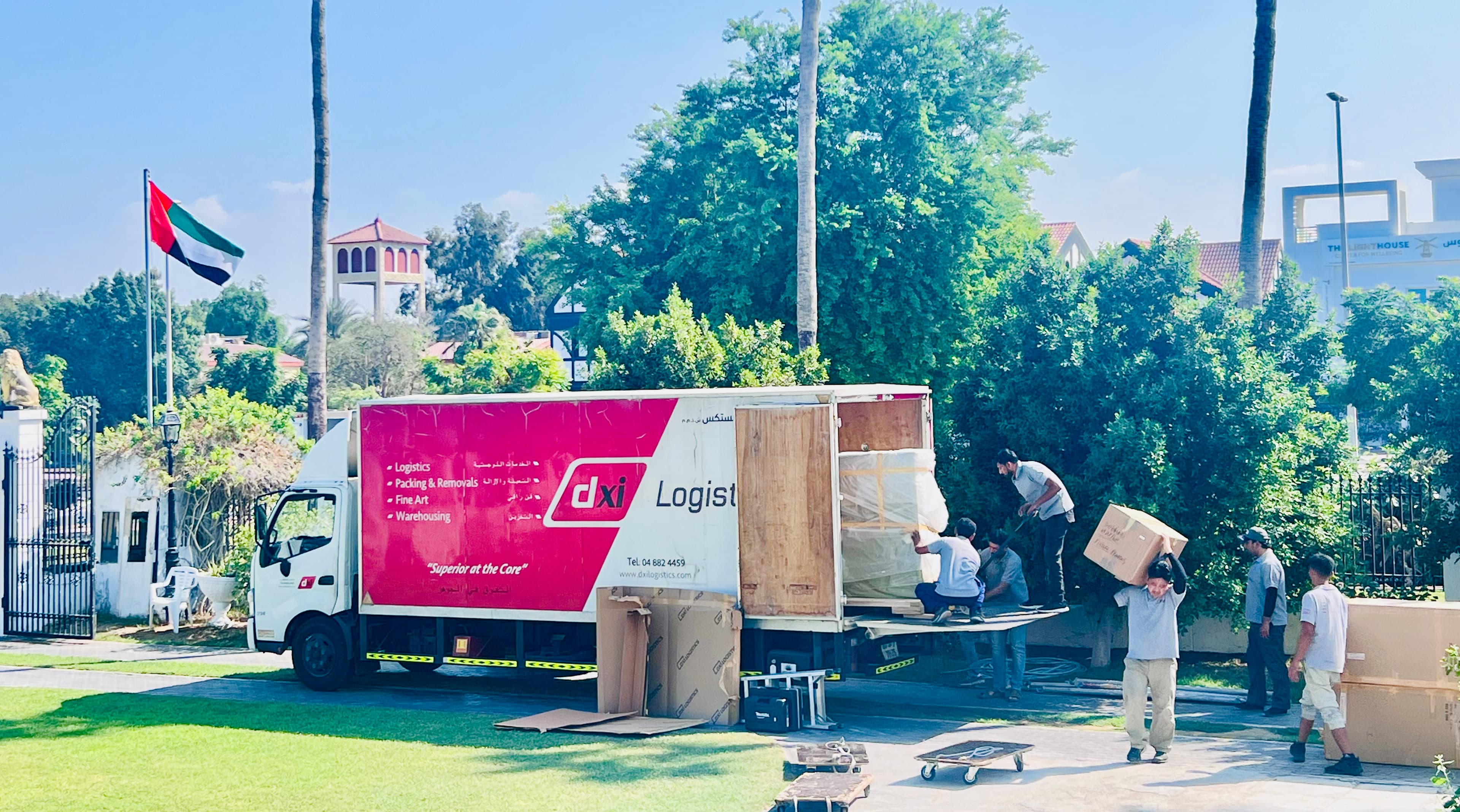

Shipping Art Out of the UAE
Export packing for paintings and antiques leaving the UAE, from condition reports and treated crates to the paperwork that travels with them.
Shipping art out of the UAE means protecting each piece against three things in turn: heat on the ground in Dubai, weeks of changing temperature and humidity in transit, and the rules every country applies to wooden crates and to the art itself. The safe sequence is a condition report, packing chosen for each piece, an export crate built to international rules, the right transport mode, and paperwork that matches what is inside. This guide follows that order.
What does it take to ship art out of the UAE safely?
Artwork reacts to the air around it. Canvas, wood, paper and glue swell and shrink as humidity changes, and repeated swings crack and cup paint layers. Above about 75 percent relative humidity, glued wood deforms and mould can grow on paper (Canadian Conservation Institute, incorrect relative humidity).
An export adds a further risk. Inside a shipping container, condensation forms when warm, moist air cools below its dew point on the container walls, and the water can drip onto the cargo (Transport Information Service, container climate). A painting that leaves a hot warehouse in Dubai and crosses cooler seas has to be packed for exactly that.
So for an art export:
- Keep pieces in an air conditioned space until the moment they are packed.
- Collect them early in the day and move them in an air conditioned vehicle.
- Pack every piece so it is sealed against moisture and cannot move.
How is each kind of artwork packed for export?
| Artwork | Export packing | Air or sea |
|---|---|---|
| Framed painting with glass | Glass taped or covered, corners guarded, wrapped and sealed in a moisture barrier, then crated | Air for valuable pieces, sea when crated and sealed |
| Canvas without glass | Acid free tissue, no bubble wrap on the paint, travel frame or soft packed in a fitted crate | Air for valuable pieces |
| Works on paper | Flat between rigid boards in an acid free folder, sealed against moisture | Air, or sea inside a sealed crate |
| Sculpture | Foam shaped to the piece, fragile parts supported, crated | Depends on size and weight |
| Antique furniture | Blanket wrapped, loose parts removed and packed separately, crated if fragile | Usually sea, with the household shipment |
Two rules apply to everything: nothing sticky touches a painted or polished surface, and nothing moves inside its packing.
What rules apply to the wooden crate itself?
Wooden crates, cases, pallets and the loose wood used to brace them count as wood packaging material, and countries apply a common international standard to them, ISPM 15. Under it, the wood is either heat treated to 56 degrees Celsius for at least 30 continuous minutes through to its core, or treated another approved way, and then marked (GOV.UK, wood packaging material for import and export). A crate without the mark can be held, treated or refused at the destination, with the artwork inside it. Ask your mover to build export crates from treated, marked wood.
Why do condition reports and insurance matter for export?
A condition report records each piece before it is packed: photographs from the front, back and sides, with existing cracks, scratches or flaking noted. The same check is made when the crate is opened at the destination. Without that before and after record, it is hard to show that anything changed in transit, and hard to claim on insurance.
For an export, arrange cover for the whole journey, from your wall in Dubai to the wall at the destination. Insurers usually ask for a value for each piece, so have a recent valuation or the purchase invoices ready.
What paperwork travels with art leaving the UAE?
Art leaving the UAE travels with an inventory that lists each piece, and usually with proof of ownership and value. The destination country’s customs decides what else it needs, and some countries treat art and antiques differently from household goods. Our Customs Documents page links to each country’s official customs authority. If the art is part of a household move to the UK, our guide to moving household goods from Dubai to the UK covers the relief and paperwork for the rest of the shipment.
Pieces made with ivory, tortoiseshell, rare woods or other protected materials can need special permits, or may not be exportable at all. Declare them to your coordinator before anything is packed.
Frequently asked questions
Should art go by air or by sea?
Air is faster and spends less time exposed to changing conditions, which suits valuable and fragile pieces. Sea costs less and suits furniture and art travelling with a household shipment, provided each piece is crated and sealed against moisture.
Can antiques with ivory or tortoiseshell be exported?
Sometimes, and only with the right permits. Some cannot leave at all. Tell your coordinator about any such piece before packing, so it can be checked first.
Do I need a valuation for transit insurance?
Usually. Insurers cover a stated value per piece, so a recent valuation or the original invoice makes cover simple and claims straightforward.
How long should a crate stay closed after arrival?
Let a crate settle in a conditioned room before you open it, so the artwork adjusts slowly to its new surroundings rather than all at once.
Shipping art abroad?
Your DXI moving coordinator can plan an art export piece by piece, from condition reports to treated export crates and climate controlled handling. Contact us to talk through your collection.